The Short Answer: Yes, for Both of You
Yes, alcohol does affect fertility, and it affects both of you. A 2017 meta-analysis in Scientific Reports pooled 19 studies of 98,657 women and found that women who drank had a 13% lower chance of conceiving per cycle than women who didn't.
For men, the UK fertility guideline, NICE NG257, says "excessive alcohol intake is detrimental to semen quality".
The effect grows with the amount. Most studies are observational, so they show a link rather than proof.
The Evidence at a Glance
Drinking is linked to a lower chance of conceiving in women and poorer semen in men, and the effect grows with intake.
| Claim | What the research found | Evidence strength |
|---|---|---|
| Drinking lowers a woman's chance of conceiving each cycle | 19 observational studies, 98,657 women: 13% lower chance per cycle for drinkers; 23% lower above 12.5 g a day (about 1.5 UK units). (Fan, Scientific Reports 2017) | Moderate |
| A few drinks a week will ruin your chances | 6,120 Danish women trying naturally (2007 to 2016): fewer than 14 Danish servings a week (a 330 mL beer or 120 mL glass of wine each) "seemed to have no discernible effect on fertility". (Mikkelsen, BMJ 2016) | Not supported |
| Heavier regular drinking lowers sperm quality | 1,221 Danish men aged 18 to 28: poorer semen from more than 5 Danish units a week (about 7.5 UK units); 33% lower concentration above 40 (about 60 UK units). Cross-sectional. (Jensen, BMJ Open 2014) | Moderate |
| Drinking within the UK 14-unit guideline harms sperm | NICE: within 14 units a week, spread out, "is unlikely to affect their semen quality" (NG257, 2026). 15 studies, 16,395 men: poorer semen mainly in daily, not occasional, drinkers (Ricci 2017). Jensen saw effects from about 7.5 UK units. | Weak |
| New sperm take about two months to come through | 11 men with normal counts: new sperm reached the ejaculate after 64 days on average (range 42 to 76). (Misell, J Urol 2006) | Moderate |
| Drinking lowers IVF success | Caffeine and alcohol studies, 26,922 women and/or partners in IVF or ICSI: 84 g a week (10.5 UK units) linked to 7% lower odds of pregnancy for women and 9% lower odds of partner live birth for men (Rao 2022). 1,708 Danish women and partners in fertility treatment: no link at low-to-moderate levels (Lyngsø 2019). | Moderate (mixed) |
Sources: Fan 2017; Mikkelsen 2016; Jensen 2014; Ricci 2017; NICE NG257, 2026; Misell 2006; Rao 2022; Lyngsø 2019. A UK unit is 8 g of alcohol; a Danish unit about 12 g.
Why Might Alcohol Affect Fertility? (Hormones Are One Theory)
The mechanisms aren't settled, but one theory is that alcohol disrupts reproductive hormones in both partners. For her, alcohol may shift the hormones behind ovulation; for him, the Danish study of 1,221 young men below linked alcohol to changes in testosterone and SHBG (sex hormone binding globulin) levels.
Does Alcohol Affect Ovulation and Her Fertility? (What the 13% Means)
Yes, on average: women who drink have about a 13% lower chance of conceiving in any given cycle than women who don't. The more she drinks, the bigger the drop. In the Fan meta-analysis, up to 12.5 g of alcohol a day (about 1.5 UK units, at 8 g a unit) was linked to an 11% lower chance per cycle. Above that, it was 23% lower.
👉 That's a relative drop, not 23 percentage points. But it applies every month you're trying.
But a BMJ study of 6,120 Danish women trying naturally found fewer than 14 servings a week (a 330 mL beer or 120 mL glass of wine, not a UK unit) showed no clear effect. It isn't a green light: UK guidance is still not to drink when planning.

Does Alcohol Affect Sperm? (Count, Quality and Recovery)
Yes: heavier regular drinking is linked to lower sperm concentration, lower total count and fewer normally shaped sperm. The clearest data is a 2014 BMJ Open study of 1,221 Danish men aged 18 to 28.
Poorer semen showed up from more than 5 Danish units a week. A Danish unit is about 12 g, so that's about 7.5 UK units.
Above 40 Danish units a week (about 60 UK units), sperm concentration was 33% lower than in men drinking 1 to 5. It was a snapshot study, so it shows a link, not cause.
So which is right? NICE NG257 says up to 14 units a week, spread across several days, "is unlikely to affect their semen quality", and a 2017 meta-analysis of 15 studies and 16,395 men found poorer semen mainly in daily drinkers, not occasional ones. Jensen is one large observational study that saw poorer semen from about 7.5 UK units. They don't fully agree.
Evidence on recovery is thin: one French case report saw a heavy drinker's semen return to normal within three months of stopping.
Does Alcohol Affect IVF and Fertility Treatment? (The Evidence Is Mixed)
Possibly, at around 10 UK units a week or more, but studies disagree at lower levels. A 2022 meta-analysis of caffeine and alcohol studies in IVF and ICSI (26,922 women and/or partners) linked 84 g a week (about 10.5 UK units) to 7% lower odds of pregnancy for women.
A US study of 2,545 couples having IVF found women drinking 4 or more US drinks a week had 16% lower odds of a live birth than women drinking fewer than 4.
But a Danish clinic study of 1,708 women (and their partners) having fertility treatment found no link at low to moderate levels.
How Long Before Trying Should You Stop Drinking? (The Three-Month Rule)
For her, UK guidance is to stop when you start planning a pregnancy. For him, allow about three months, because new sperm take around two months to come through. The NHS puts it plainly: "It's recommended that if you're pregnant or planning to become pregnant you should not drink alcohol."
NICE, citing the Chief Medical Officers, agrees the safest approach is no alcohol at all.
For him, NICE doesn't say to stop completely, but changes take time. In a study of 11 men with normal sperm counts, newly made sperm reached the ejaculate after 64 days on average. Three months is a sensible margin, not a measured figure.

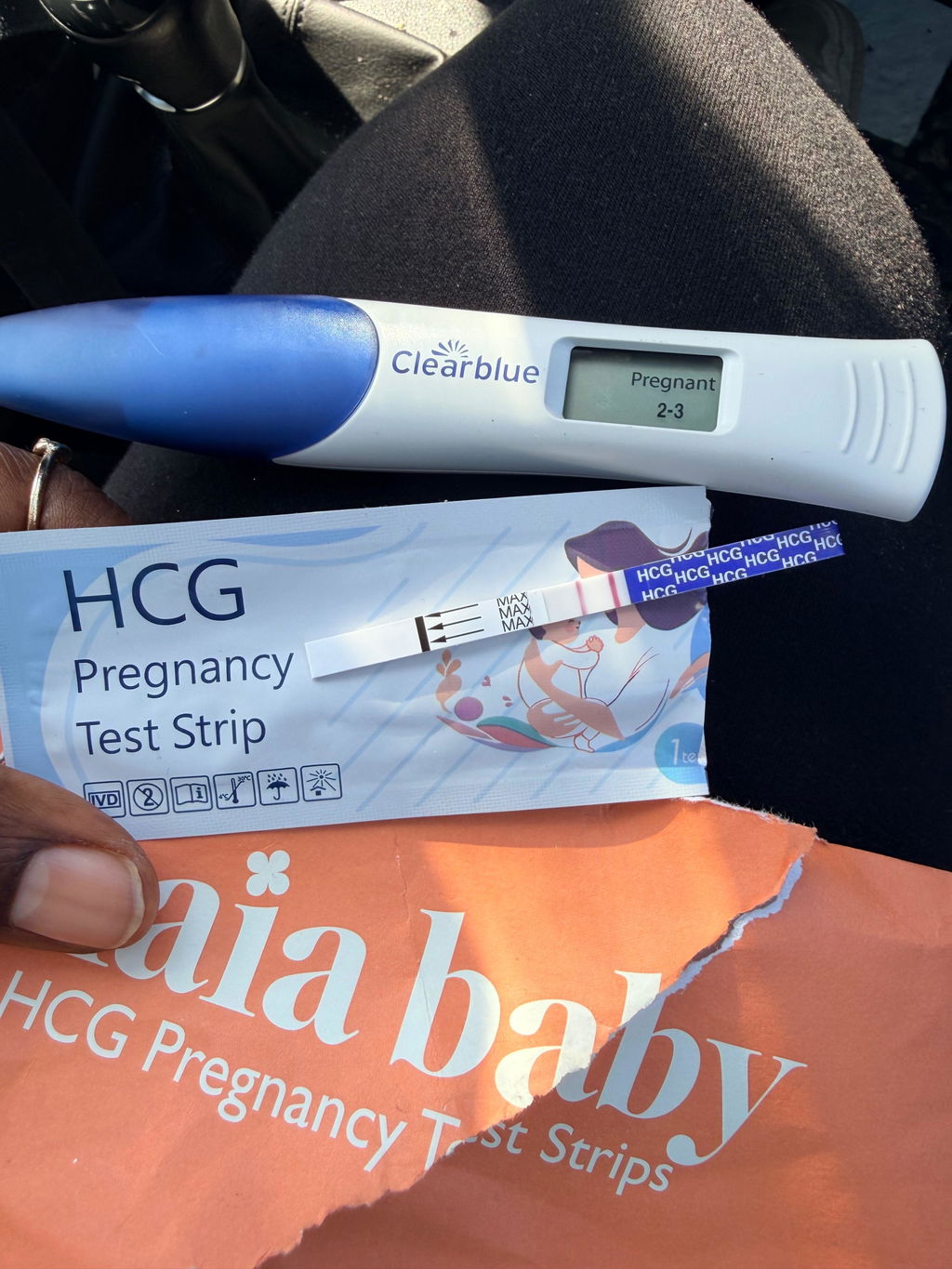
For what it's worth, we both stopped drinking for three months before we started trying. Not just one of us. Both.
What Does 14 Units Actually Look Like? (Less Than You'd Think)
One UK unit is 10 ml or 8 g of pure alcohol, and 14 units is about six pints of average-strength beer or ten small glasses of lower-strength wine, according to the NHS. The UK Chief Medical Officers' low risk guidelines set 14 units a week for both men and women, spread over 3 or more days.
- 125 ml glass of 12% wine: 1.5 units
- Pint of 5.2% lager: 3 units
NICE says that for her, the safest approach is none; if she does drink, keeping to 1 or 2 units once or twice a week and not getting drunk reduces the risk of harming a developing baby.

"I Drank Before I Knew I Was Pregnant": What Now?
Stop from the point you find out, and try not to panic: the risk is likely to be low. The NHS says to avoid further drinking, then adds: "However, they should not worry unnecessarily, as the risks of their baby being affected are likely to be low." The UK Chief Medical Officers agree, if you drank only small amounts before you knew.
A 2019 meta-analysis of 24 studies and 231,808 pregnant women found a modestly higher miscarriage risk with drinking during pregnancy (odds ratio 1.19). It didn't cover drinking before pregnancy.
If you drank in the two week wait and you're worried, the NHS says talk to a midwife or doctor.
Frequently Asked Questions About Alcohol and Fertility
Can a man drink alcohol when trying to conceive?
Yes, within limits. NICE says up to 14 UK units a week, spread across several days, is unlikely to affect semen quality. A Danish study of 1,221 young men linked more than about 7.5 UK units a week to poorer semen, so cutting right down is the simplest safe step.
How long should you stop drinking before trying to conceive?
For her, the NHS says not to drink if you're planning to become pregnant, so stop when you start planning. For him, new sperm first reach the ejaculate after about two months: in a study of 11 men, 64 days on average. Three months is a sensible margin.
What happens if you drink during the two week wait?
It may lower that cycle's chances. One older study of 413 women (1990 to 1994) linked 3 to 6 drinks (not UK units) a week after ovulation to lower odds of conceiving. If you then find out you're pregnant, stop; the NHS says the risk is likely to be low.
Can you still conceive if you drink alcohol?
Yes. For most people, drinking is linked to a lower chance per cycle rather than being unable to conceive; very heavy drinking can stop sperm production. In a Danish study of 6,120 women, 69% got pregnant during up to 12 cycles of follow-up.
Will quitting alcohol increase sperm count?
It may, especially after heavy drinking, but direct evidence is thin. Danish men drinking about 60 UK units a week or more had 33% lower sperm concentration than men drinking 1 to 5 Danish units, and one case report saw a heavy drinker's semen recover within three months of stopping.
It Wasn't About Willpower. It Was About Doing It Together.
Alcohol affects fertility in both partners, so cutting back works best as a shared decision.
The NHS says see a GP after a year of trying, or sooner if the partner trying to get pregnant is 36 or over or you know of a possible fertility problem. If you need help to stop drinking, speak to a GP. If you're physically dependent, don't stop overnight: the NHS warns this could be harmful, so get advice first. Call 999 for severe withdrawal symptoms: hallucinations, severe tremors, seizures or fits. Drinkline, the national alcohol helpline: 0300 123 1110.