Home insemination means placing semen high in the vagina with a needleless syringe around ovulation, instead of having intercourse. You will also see it called at home insemination, self insemination, artificial insemination at home or, not very accurately, the turkey baster method.
A randomised trial found it worked as well as the clinic. In a randomised study of insemination at home against insemination at the clinic, both with cryopreserved donor semen, Hogerzeil and colleagues, 1988 recorded 13 pregnancies among the 29 women who started at home in the first six cycles, against 11 among the 24 who started at the clinic, "yielding no statistical difference in pregnancy rate". With 53 women the trial cannot prove the two are equivalent, and home was marginally lower on the raw numbers, but it is the only randomised comparison of the two settings I have found.
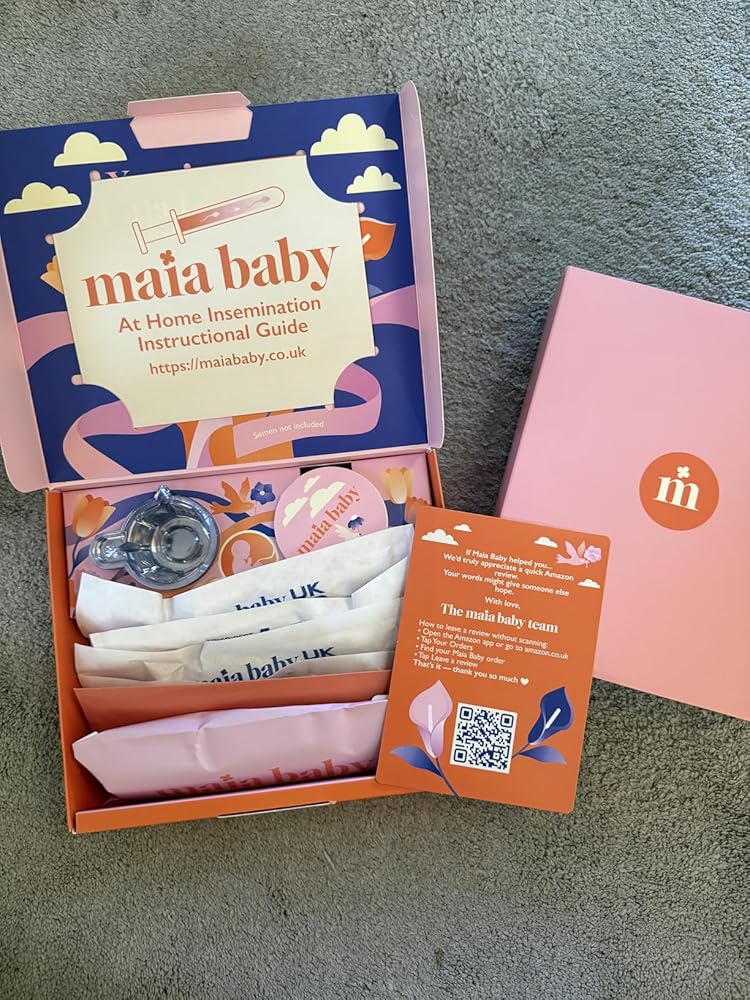
The practical case is strong too. A single cycle of IUI with donor sperm is listed at £2,795 on Manchester Fertility's patient price list, active from April 2026. Home insemination has no waiting list, no theatre appointment and no travel, you do it in your own bed at the hour your ovulation test tells you to, and it works for people who find intercourse painful or impossible. The Maia Baby at-home insemination and fertility tracking kit was built for exactly that.
More than 100 people have messaged us to say they conceived using the kit, as at September 2026. Maia Baby was founded by two NHS healthcare professionals, and this guide quotes HFEA, NICE, the NHS and the published papers in their own words, because that is the standard we would want if it were us.
In the UK the law matters as much as the method. HFEA, the fertility regulator, says that with a donor outside a licensed clinic, if you are a single patient or in a same-sex couple and are not married or in a civil partnership, "the donor will be considered the legal parent of any children you might have."
This guide is general information, not medical or legal advice.
What Is Home Insemination, and Who Uses It? (More People Than You Might Think)
Home insemination is the placing of semen high into the vagina with a syringe that has no needle, at the fertile time and without intercourse. Published clinical descriptions, such as the case report by Keren and Kelly in Canadian Family Physician, 2020, call it intravaginal insemination (IVI).
The "turkey baster" name has stuck, but I have not found a published description that uses one, and a kitchen tool is not sterile. Two of the published descriptions specify a 3 ml or 5 ml syringe barrel.
👉 A needle is never part of the procedure. The syringe is used without one.
Two broad groups use it:
- Couples who cannot have intercourse, or find it very difficult: vaginismus, pain with sex, erectile or ejaculatory difficulty, spinal cord injury. These are treatable in their own right (the NHS says vaginismus "can be treated"), and home insemination does not replace that care.
- Same-sex couples, solo women and anyone using a known donor. Donor sperm changes the legal and health picture completely. One couple's experience is in Two Mums, Third Try.
Why People Choose Home Insemination (And Why It Suits Some People Better)
Every route to a baby has a cost, a wait and a set of trade-offs. Here is where home insemination genuinely wins.
- Cost. Manchester Fertility's patient price list, active from April 2026, gives £2,795 for a single cycle of IUI using donor sperm and £1,795 for a single cycle using partner sperm. A home kit is bought once. We set out the wider picture in what insemination costs in the UK.
- No waiting list, no appointment. Nothing has to be scheduled around a clinic's theatre list. You inseminate when your own ovulation test says to, not when a diary allows.
- Privacy. It happens in your own home, with the people you choose, and nobody else has to be told.
- It works when intercourse does not. This is the group the published evidence covers best: vaginismus, pain with sex, erectile or ejaculatory difficulty, spinal cord injury. One reader has written up her journey to pregnancy after vaginismus, and another finding another way to conceive with vulvodynia.
- It is the natural first step for same-sex couples and solo mothers. Two mums, one donor, a positive on the third try is one couple's account. With a donor, the legal position is the part to get right first, and it has a whole section below.
- You can try home first. One reader was quoted £12,000 by a clinic and tried at home before committing to that.
Clinic treatment has real advantages of its own and I have not hidden them: the comparison with IUI, NICE's own recommendation and HFEA's position on donors are all set out in full further down this page.
Home Insemination, IUI, IVF and ICSI: What Each One Actually Is
These four names get used as though they were four rungs on one ladder, and they are not. Two of them are insemination, which means putting sperm where it needs to be and letting fertilisation happen inside the body. The other two are fertilisation in a laboratory. Here is what happens in each, where it happens, what it costs in the UK and what the published rates are, so you can see which one your own situation actually calls for.
The first thing to clear up: IVI and home insemination are the same procedure. IVI stands for intravaginal insemination, and it is the name the clinical literature gives to exactly what this guide describes, semen placed high in the vagina with a needleless syringe at the fertile time. The case report by Keren and Kelly in Canadian Family Physician, 2020 uses that term for it. So when a site lists IVI beside IUI and IVF as though it were a third treatment you could book, it is not a separate thing: it is home insemination under its clinical name. The word that changes is the setting, not the procedure. ICI, intracervical insemination, is the close neighbour and is not identical, because it places semen at the cervix rather than in the vagina, and NICE guideline NG257 tabulates it separately.
Home insemination, also called IVI
What happens. Semen is collected into a clean, sterile container, drawn up into a 3 ml or 5 ml needleless syringe barrel and released high in the vagina, after which the woman lies down for 15 to 20 minutes. Nothing is ever passed through the cervix at home. The full protocol is in the section above on how it is done.
Where. Your own home, at the hour your ovulation test tells you. No referral, no waiting list, no appointment.
Cost. A kit bought once, plus the ovulation tests. There is no clinic fee, no drug bill and no HFEA licence fee. Donor sperm from a licensed bank, if you need it, is a separate cost and it sits on top of the clinic routes too.
Published rate. HFEA's published statistics cover treatment at licensed UK clinics, so there is no national figure for insemination done at home. The randomised evidence is the 1988 trial of 53 Dutch women described above, Hogerzeil and colleagues, with 13 pregnancies among the 29 who started at home in the first six cycles and no statistical difference from the clinic group. For the clinic version of the same idea, NICE NG257 table 2 tabulates 58% of women under 31 conceiving within 6 cycles of ICI with fresh donor semen, rising to 76% by 12 cycles, from a Dutch donor insemination programme.
Typically for. People who cannot have intercourse or find it very difficult, same-sex couples and solo women using a known donor, and anyone who wants to try the simplest route before committing to a clinic.
IUI, intrauterine insemination
What happens. HFEA describes it like this: "Sperm are washed and prepared so that the best quality sperm are selected and injected into your uterus. The whole process takes just a few minutes and is relatively pain free." You can have it in your natural cycle or with fertility drugs and scans, and HFEA is clear that "You can only have IUI if your fallopian tubes are open and healthy."
Where. A licensed clinic, in the treatment room, with the sperm prepared in the laboratory first.
Cost. HFEA says one cycle of IUI "is typically a quarter of the price of one IVF cycle". Manchester Fertility's patient price list, active from April 2026, lists £1,795 for a single cycle using partner sperm, £2,795 using donor sperm from the clinic and £1,350 using a known donor, with monitoring scans at £170 each on top.
Published rate. HFEA puts it plainly: "Success rates for IUI are generally around a third of that for IVF." NICE NG257 table 2 gives donor sperm IUI as 57% within 6 cycles and 81% within 12 for ages 18 to 34, 54% and 78% at 35 to 37 and 47% and 72% at 38 to 39. Those are cumulative rates NICE derives from HFEA donor insemination data for 1991 to 2023, and NICE itself calls them theoretical rates derived from per-cycle probabilities.
Typically for. NICE recommends offering 12 cycles of unstimulated IUI before considering IVF for people who cannot have vaginal intercourse because of a clinically diagnosed physical disability or psychosexual problem, and for couples where the partner has azoospermia and surgical sperm retrieval is not suitable or has not worked. For people using donor insemination who have not conceived after 6 cycles, NICE recommends 6 cycles of unstimulated donor IUI before IVF.
IVF, in vitro fertilisation
What happens. HFEA: "the woman has medicines (fertility hormones) to stimulate the ovaries to produce several eggs. The eggs are then collected and mixed with sperm in a laboratory." If fertilisation works, "the embryos are allowed to develop for between two and six days", and the strongest is transferred to the womb. One cycle takes 3 to 6 weeks.
Where. A licensed clinic and its laboratory. Egg collection is a theatre procedure.
Cost. HFEA: "one cycle of IVF costs £5,000 on average, although this varies considerably." Manchester Fertility's April 2026 list gives £4,950 for an IVF cycle, with medication at £985 to £3,200 per cycle on top and embryo storage at £425 a year after the first.
Published rate. In Fertility treatment 2024: trends and figures, published June 2026, HFEA reports an average IVF birth rate of 30% per embryo transferred using the patient's own eggs across fresh and frozen transfers in 2024, highest at 38% for patients aged 18 to 34 and lowest at 8% for patients aged 43 to 44.
Typically for. HFEA lists blocked or damaged fallopian tubes, unexplained fertility problems or other treatments that have not worked, low sperm count or poor sperm shape or movement, ovulation problems that have not responded to other treatment, older patients, and surrogacy. NICE offers IVF to people who have not yet reached their 42nd birthday where there is a diagnosed cause for which other treatment is unsuitable or has failed, or 2 years of unexplained infertility, or no conception after 12 cycles of artificial insemination of which 6 or more were IUI, and recommends an initial 3 full cycles under 40.
ICSI, intracytoplasmic sperm injection
What happens. HFEA: "Your treatment will be exactly the same as with IVF. The only difference is that instead of mixing the sperm with the eggs and leaving them to fertilise, a skilled embryologist will inject a single sperm into the egg." It is a step inside an IVF cycle, not a treatment you have instead of one.
Where. The same clinic and the same laboratory as IVF, under a microscope.
Cost. Manchester Fertility's April 2026 list gives £6,450 for IVF with ICSI, or £1,500 added to an IVF cycle on the day of egg collection if the medical team advises it, with the same £985 to £3,200 of medication.
Published rate. HFEA does not publish a separate figure: "Success rates for ICSI tend to be very similar to IVF so we don't publish separate statistics." So the IVF numbers above are the best published guide.
Typically for. HFEA lists a very low sperm count, sperm that are abnormally shaped or do not move normally, previous IVF where none or very few eggs fertilised, sperm collected surgically, frozen sperm that is not of the highest quality, and embryo testing. NICE recommends: "Offer ICSI using surgically retrieved sperm", or with eggs that have been frozen and thawed, consider it for abnormal semen parameters or after failed fertilisation in a previous cycle, and "Do not use ICSI for non-male factor fertility problems if the semen parameters are normal."
| Treatment | What happens | Where | UK cost | Published rate | Typically for |
|---|---|---|---|---|---|
| Home insemination (IVI) | Semen placed high in the vagina with a needleless syringe at the fertile time. Nothing passes through the cervix. | At home, no appointment and no referral. | A kit bought once, plus ovulation tests. No clinic fee and no drug bill. Donor sperm, if needed, is extra on any route. | No national figure: HFEA's statistics cover licensed clinics only. Hogerzeil 1988, 53 Dutch women randomised: 13 pregnancies among the 29 who started at home in 6 cycles, no statistical difference from the clinic. NICE NG257 table 2 for clinic ICI with fresh donor semen: 58% within 6 cycles under 31. | People who cannot have intercourse or find it very difficult, same-sex couples and solo women using a known donor, and anyone wanting to try the simplest route first. |
| IUI | HFEA: "Sperm are washed and prepared so that the best quality sperm are selected and injected into your uterus." Only possible if the fallopian tubes are open and healthy. | A licensed clinic. HFEA: "The whole process takes just a few minutes and is relatively pain free." | HFEA: about a quarter of the price of an IVF cycle. Manchester Fertility, April 2026: £1,795 partner sperm, £2,795 clinic donor sperm, £1,350 known donor. | HFEA: "Success rates for IUI are generally around a third of that for IVF." NICE NG257 table 2, donor IUI, ages 18 to 34: 57% within 6 cycles and 81% within 12, NICE's theoretical cumulative rates from HFEA donor insemination data for 1991 to 2023. | NICE: 12 cycles before IVF for people unable to have vaginal intercourse and for couples using donor sperm because of azoospermia; 6 cycles of donor IUI for those who have not conceived after 6 cycles of donor insemination. |
| IVF | HFEA: the ovaries are stimulated, then "The eggs are then collected and mixed with sperm in a laboratory." Embryos develop for two to six days and one is transferred. | A licensed clinic and its laboratory, with egg collection in theatre. One cycle takes 3 to 6 weeks. | HFEA: "one cycle of IVF costs £5,000 on average, although this varies considerably." Manchester Fertility, April 2026: £4,950, plus £985 to £3,200 of medication per cycle. | HFEA, UK data for 2024: 30% birth rate per embryo transferred using the patient's own eggs, 38% at ages 18 to 34 and 8% at 43 to 44. | HFEA: blocked or damaged tubes, unexplained problems or failed treatment, low sperm count, ovulation problems, older patients, surrogacy. NICE offers it before the 42nd birthday on set criteria, 3 full cycles under 40. |
| ICSI | HFEA: "exactly the same as with IVF", except that "a skilled embryologist will inject a single sperm into the egg" rather than mixing the two. | The same laboratory as IVF. It is a step within an IVF cycle. | Manchester Fertility, April 2026: £6,450 for IVF with ICSI, or £1,500 added to an IVF cycle on the day of egg collection. | HFEA: "Success rates for ICSI tend to be very similar to IVF so we don't publish separate statistics." | HFEA: very low sperm count, poor shape or movement, failed fertilisation in a previous IVF cycle, surgically collected sperm, embryo testing. NICE: offer ICSI with surgically retrieved sperm, and do not use it where semen parameters are normal. |
Sources: HFEA on IUI, HFEA on IVF, HFEA on ICSI, HFEA, Fertility treatment 2024: trends and figures, NICE NG257 table 2 and the NG257 recommendations on IUI, IVF access and ICSI, and Manchester Fertility's patient price list, active from April 2026. Prices are one clinic's list, not a national average.
Being straight about what home insemination cannot do. It is cheaper and it is private, and both of those are real. What it cannot do is get past a physical obstacle. If the fallopian tubes are blocked, if there is no sperm in the ejaculate, if semen quality is severely reduced, then insemination of any kind is not the treatment, and IVF and ICSI exist precisely for those situations. HFEA says the same about the clinic version: "It's important to understand that IUI is not a cheaper/less invasive alternative to IVF. If you have a significant fertility problem it's unlikely to work for you." Where donor sperm is used, NICE's recommendation is to "Offer donor sperm intrauterine insemination (IUI) in preference to intracervical insemination because it improves pregnancy rates", and in the Kop trial of 421 women needing donor sperm, IUI produced live births in 39% against 24% for ICI within 8 months of randomisation. Six cycles at home without a pregnancy is the point to be assessed rather than the point to keep going.
Does Home Insemination Work? (What the Published Studies Actually Say)
The strongest finding I have found is a randomised one, and it found home insemination worked as well as the clinic, with no significant difference between the two. Hogerzeil and colleagues, 1988 allocated 53 Dutch women with primary infertility at random to inseminate at home with cryopreserved donor semen or to be inseminated at the clinic, for six cycles. In those first six cycles there were 13 pregnancies among the 29 women who started at home and 11 among the 24 who started at the clinic, "yielding no statistical difference in pregnancy rate". A further 45 couples who did not meet the entry criteria chose home insemination in the same period, and 20 home-inseminated pregnancies followed.
In one series, home insemination did at least as well as the clinic. Kathiresan and colleagues, 2011 reviewed 82 couples at a US medical centre where the man had a spinal cord injury. Intravaginal insemination, "performed mostly at home by selected couples", was used by 45 couples and 17 of them conceived, a 37.8% pregnancy rate. Intrauterine insemination at the clinic was used by 57 couples and 14 of them conceived, 24.6%. Those two groups overlap: 45 plus 57 is more than the 82 couples in the series, so some of them had both. The couples were selected rather than randomised, so this is not a head-to-head trial.
Per-cycle figures exist too. Rutkowski and colleagues, 1999 reported that in 31 Australian couples where the man had a spinal cord injury, home insemination after vibroejaculation gave a pregnancy rate per cycle of 22%, and 5% after electroejaculation. In the same series, intrauterine insemination at the clinic after electroejaculation reached 30% per cycle. The "10 to 15% per cycle" style figures on the sites I checked give no citation, and I could not find a primary source behind them.
The study most often quoted is Banerjee and Singla, 2017: 55 couples in New Delhi with unconsummated marriages, using fresh partner sperm. After 6 cycles the pregnancy rate was 69% at age 20 to 33 (29 couples), 43% at 33 to 36 (14 couples) and 25% over 36 (12 couples). The paper calls that a clinical pregnancy rate but records it as a positive urine pregnancy test. It is small, retrospective and from one centre in India.
The largest I found is Izhar and colleagues, 2024, a prospective study of 769 couples in Karachi with unconsummated marriages, a normal semen analysis and a normal scan, followed for up to 12 months. Pregnancy was achieved by 72.8% with vaginismus, 70.2% with premature ejaculation and 51.4% with erectile dysfunction. In Sønksen and colleagues, 2012, 43% of 140 couples where the man had a spinal cord injury and could not ejaculate achieved pregnancy, using penile vibratory stimulation and self-insemination at home. Median time to the first pregnancy was 22.8 months.
Being straight with you about the limits: most of these studies excluded every other fertility problem and had no control group, and two counted a positive urine test as a pregnancy. They are a handful of studies, most of them small, mostly in couples who cannot have intercourse, and most of them report cumulative rates over months rather than a rate per cycle. None of it is a guarantee, and none of it replaces seeing a GP if this is not working.
👉 I could not find a published study reporting pregnancy rates for home insemination with a known donor in same-sex couples or solo women. Almost all the home evidence I found is heterosexual couples using partner sperm; home insemination with frozen donor semen from a clinic turns up in a 1988 Dutch randomised study and in a 1983 report in the BMJ. The nearest proxy is clinic data with donor sperm, labelled as such below.
| Study | Setting | Who was studied | Sperm | Per-cycle rate | Cumulative rate |
|---|---|---|---|---|---|
| Banerjee and Singla 2017 (PMID 29430157) | HOME | 55 Indian couples with unconsummated marriage, no other infertility cause | Fresh, partner | Not reported | After 6 cycles: 69% (age 20 to 33), 43% (33 to 36), 25% (over 36) |
| Izhar, Husain and Masood 2024 (PMID 40190518) | HOME | 769 Pakistani couples with unconsummated marriage; normal semen analysis and scan | Fresh, partner | Not reported | Up to 12 months: 72.8% (vaginismus), 70.2% (premature ejaculation), 51.4% (erectile dysfunction) |
| Rutkowski et al 1999 (PMID 10438118) | HOME | 31 Australian couples where the man had a spinal cord injury; retrospective single-clinic series | Fresh, partner | 22% (home insemination after vibroejaculation), 5% (after electroejaculation) | 55% per couple, but across all methods including clinic IUI and IVF (17 pregnancies in 97 cycles) |
| Sønksen et al 2012 (PMID 21912403) | HOME | 140 couples where the man had a spinal cord injury and could not ejaculate; two European and one American centre | Fresh, partner | Not reported | 43% of couples pregnant; median time to first pregnancy 22.8 months |
| Hogerzeil et al 1988 (PMID 3371480) | HOME | 53 Dutch women with primary infertility, randomly allocated to home or clinic insemination | Frozen donor | Not reported | First 6 cycles: 13 pregnancies among 29 home starters, no significant difference from clinic |
| Kathiresan et al 2011 (PMID 21621768) | HOME | 45 US couples where the man had a spinal cord injury; insemination done mostly at home | Fresh, partner | Not reported | 37.8% of couples pregnant (17 of 45) |
| Kop et al 2022, randomised trial (PMID 35459949) | CLINIC DATA | 421 women needing donor sperm, mean age 34 | Frozen donor | Not reported in abstract | Within 8 months of randomisation, live birth: 24% ICI v 39% IUI |
| NICE NG257 table 2, ICI with fresh semen | CLINIC DATA | Dutch women in a donor insemination programme (NICE's table cites "Zaadstra 1991" and does not describe the population; the nearest published Zaadstra cohort I could find is BMJ 1993) | Fresh donor | Not reported in NICE table 2 | 6 cycles: 58% (under 31), 50% (31 to 35), 39% (over 35). 12 cycles: 76%, 71%, 55% |
| NICE NG257 table 2, ICI with thawed semen | CLINIC DATA | 2,193 French nulliparous women with azoospermic husbands (Schwartz and Mayaux 1982) | Thawed donor | Not reported in NICE table 2 | 6 cycles: 50% (under 30), 43% (30 to 34), 33% (over 34). 12 cycles: 70%, 62%, 54% |
| NICE NG257 table 2, IUI with donor sperm | CLINIC DATA | HFEA donor insemination data for 1991 to 2023, unstimulated and stimulated IUI; NICE calls these theoretical cumulative rates derived from per-cycle probabilities | Donor | Not reported in NICE table 2 | 6 cycles: 57% (18 to 34), 54% (35 to 37), 47% (38 to 39). 12 cycles: 81%, 78%, 72% |
Sources: the home studies linked above; Hogerzeil et al, Fertility and Sterility, 1988; Kathiresan et al, Fertility and Sterility, 2011; Kop et al, Human Reproduction, 2022; NICE guideline NG257, table 2, 2026.

NICE publishes rates for intracervical insemination itself. NICE guideline NG257 (March 2026), table 2, tabulates 58% of women under 31 conceiving within 6 cycles of ICI with fresh semen, 50% at 31 to 35 and 39% over 35, rising to 76%, 71% and 55% by 12 cycles. Those are the national guideline body's own tabulated figures for insemination that does not enter the uterus. They are clinic data, and ICI places semen at the cervix rather than high in the vagina, so treat them as a benchmark and not as a home rate. The same table puts IUI with donor sperm higher still, at 57% within 6 cycles and 81% within 12 for ages 18 to 34, which NICE derives from HFEA donor insemination data for 1991 to 2023. The honest comparison alongside them: with frozen donor sperm, IUI produced more live births than ICI, 39% against 24%, within 8 months of randomisation, in the Kop trial of 421 women.
NICE's donor insemination recommendation reads: "Offer donor sperm intrauterine insemination (IUI) in preference to intracervical insemination because it improves pregnancy rates." We have set out what insemination costs in the UK separately.
How Is Insemination With a Syringe Actually Done? (What the Published Protocols Describe)
The published protocols describe much the same thing: semen is collected into a sterile container, drawn into a small syringe with no needle, and released into the vagina at the fertile time.
- Collection. Semen is collected by masturbation into a clean, sterile, non-spermicidal container. The WHO semen laboratory manual says ordinary latex condoms "contain agents that interfere with the motility of spermatozoa", and that lubricants "should be avoided".
- Time and temperature. WHO's laboratory standard says examination should "ideally" begin "within 30 minutes after collection, but at least within 60 minutes", and that a sample in transit must not "go below 20 °C or above 37 °C". That is a rule for laboratories, not for insemination, but it is the closest there is.
- Insemination. The sample is drawn up into a 3 ml or 5 ml syringe barrel, with no needle at any point. The syringe is introduced into the vagina and, in the words of Keren and Kelly, "the plunger gently pushed to deposit semen into the vagina". Two of the three papers use the bare barrel; the Indian study attached a soft catheter to the syringe to place the semen deeper in the vagina.
- Afterwards. The woman lies down, for 15 to 20 minutes in that Canadian report and at least 20 minutes in the Pakistani study. See our guide to sperm leakage after insemination for what happens next.
- Timing. Couples in both large home studies, Banerjee and Singla 2017 and Izhar and colleagues 2024, inseminated on alternate days across the fertile window. NICE says insemination should be "timed around ovulation", and our best time to get pregnant guide covers finding that window.
- Equipment. The protocols specify a sterile container and a syringe barrel. I would treat both as single-use: opened sterile, used once, thrown away.

On lubricant. In a laboratory study, Agarwal and colleagues, 2008, three common lubricants significantly reduced progressive motility after 30 minutes, while the one sold as fertility-friendly, Pre-Seed, did not. WHO's rule is the same shape: avoid lubricant, and if it is absolutely necessary use a validated non-spermatotoxic one. To be fair, Steiner and colleagues, 2012 found women using lubricant during intercourse conceived at a similar rate, so the laboratory effect may not fully carry over.
👉 Nothing goes through the cervix.
It is easy to assume this is a home version of clinic IUI. It is not: the NHS says IUI "is usually done at a fertility clinic", and donor sperm for it has to go through a licensed one, so never attempt to pass anything through the cervix at home.
Getting the Timing Right (What the Studies Show About When to Inseminate)
Timing is the part of this you control completely, and it is the part that shows up in the data.
In Meyer and colleagues, 1996, 138 women with confirmed bilateral tubal patency went through 524 monitored insemination cycles with cryopreserved donor sperm at a US academic centre, every cycle tracked with daily urinary LH tests. Ninety-one of the 138 women conceived, 66%, at an overall rate of 18.7% per insemination cycle. The finding that matters here is this: pregnancy "was nearly twice as likely after insemination on the day after the urinary LH surge as on the day of surge detection", and the authors conclude that "insemination the day after the urinary LH surge is superior to the day of surge detection".
That was a clinic study using a cervical cup rather than a syringe at home, so its rates are not home rates. The timing finding is the transferable part, and it is why the Maia Baby kit includes 15 ovulation test strips rather than leaving you to guess: find the surge first, then time the insemination to it. NICE says insemination should be "timed around ovulation", couples in both large home studies, Banerjee and Singla 2017 and Izhar and colleagues 2024, inseminated on alternate days across the fertile window, and our guide to the best time to get pregnant covers finding that window.
Dr Randy Morris, a board-certified fertility specialist at a clinic in Illinois, works through exactly this question for clinic IUI: whether to inseminate one or two days after a urine ovulation test turns positive.
And if ovulation tests are new to you, Dr Natalie Crawford, a double board-certified obstetrician-gynaecologist and reproductive endocrinologist in Texas, covers when to start testing, which hormone the test is reading and what a positive actually means.
Both are American clinicians talking about clinic treatment. The hormone, and the window it marks, are the same wherever you are.
Who Makes the Maia Baby Kit (And Why We Wrote This Guide)
Maia Baby was founded by Matthew Jones and Sarah Thomas. Between them they have over 15 years' experience as NHS professionals. That is where their working understanding of device compliance and the approved-device process comes from, and it is why this guide quotes HFEA, NICE, the NHS and the published papers in their own words instead of paraphrasing them.
More than 100 people have messaged us to say they conceived using the kit, as at September 2026. We do not know how many people have used it altogether, so that is a count of messages and not a success rate, and we are not going to dress it up as one. The kit's product page carries 75 published reviews at a 4.9 average, and every one of them is there to read.
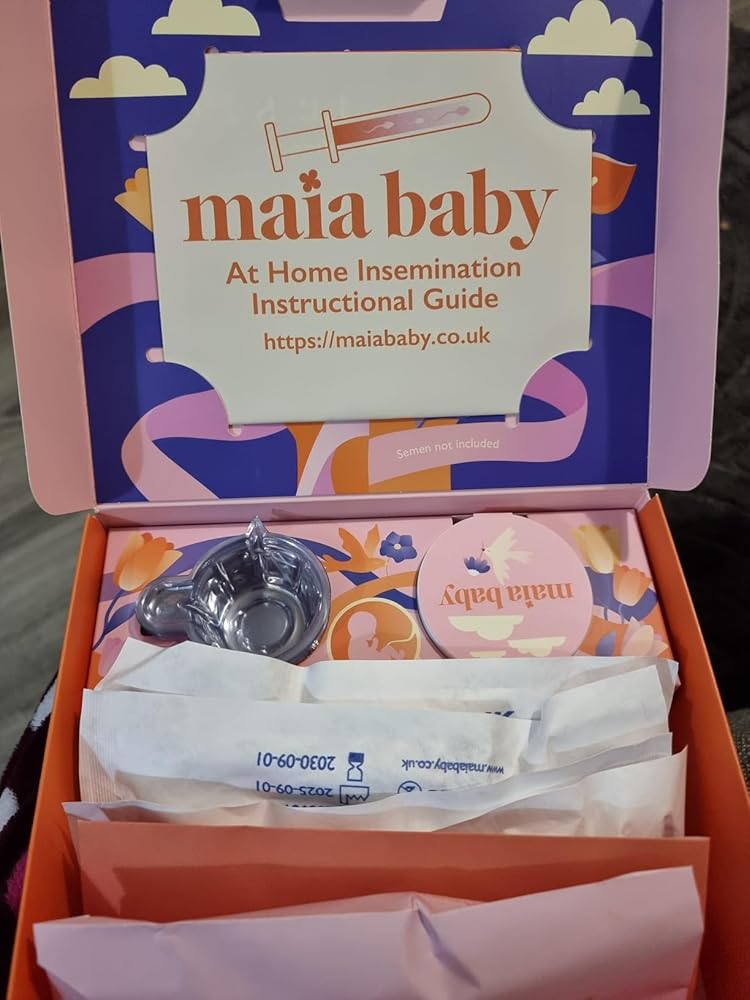
The kit is the practical answer to the method section above. Each kit contains four soft-tipped insemination syringes and four sperm collection pots, so a cycle can be tried more than once without reusing anything, plus 15 ovulation (LH) test strips, 5 pregnancy tests and 20 urine collection cups for the testing. It comes with full instructions, and video guides are coming.
People who used it have written up how it went, in their own words: first month using the kit and we were pregnant, a clinic quoted £12,000, so we tried home first, two mums, one donor, a positive on the third try, our journey to pregnancy after vaginismus and finding another way to conceive with vulvodynia.
What People Who Used the Kit Say (Their Words, Not Ours)
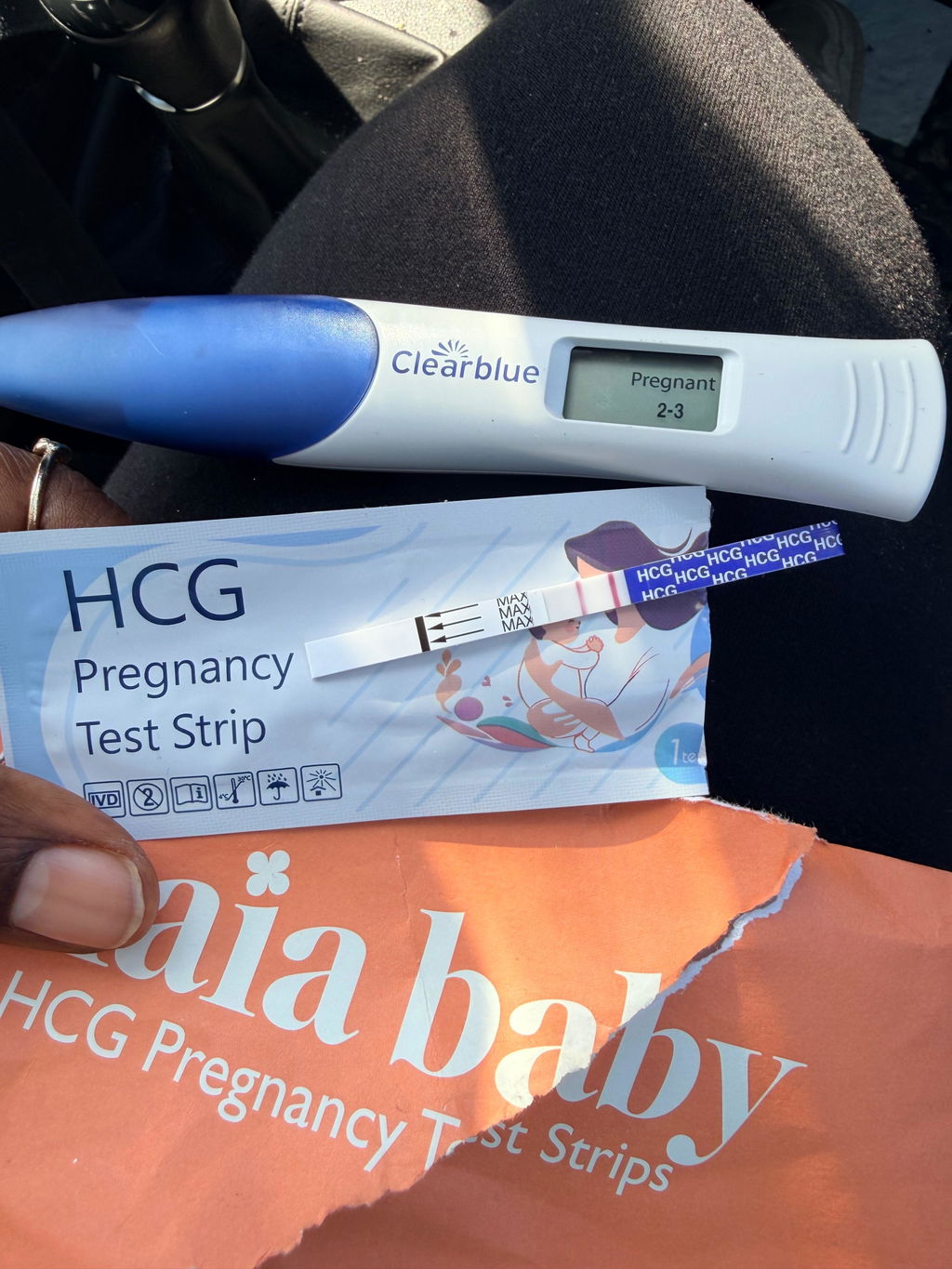
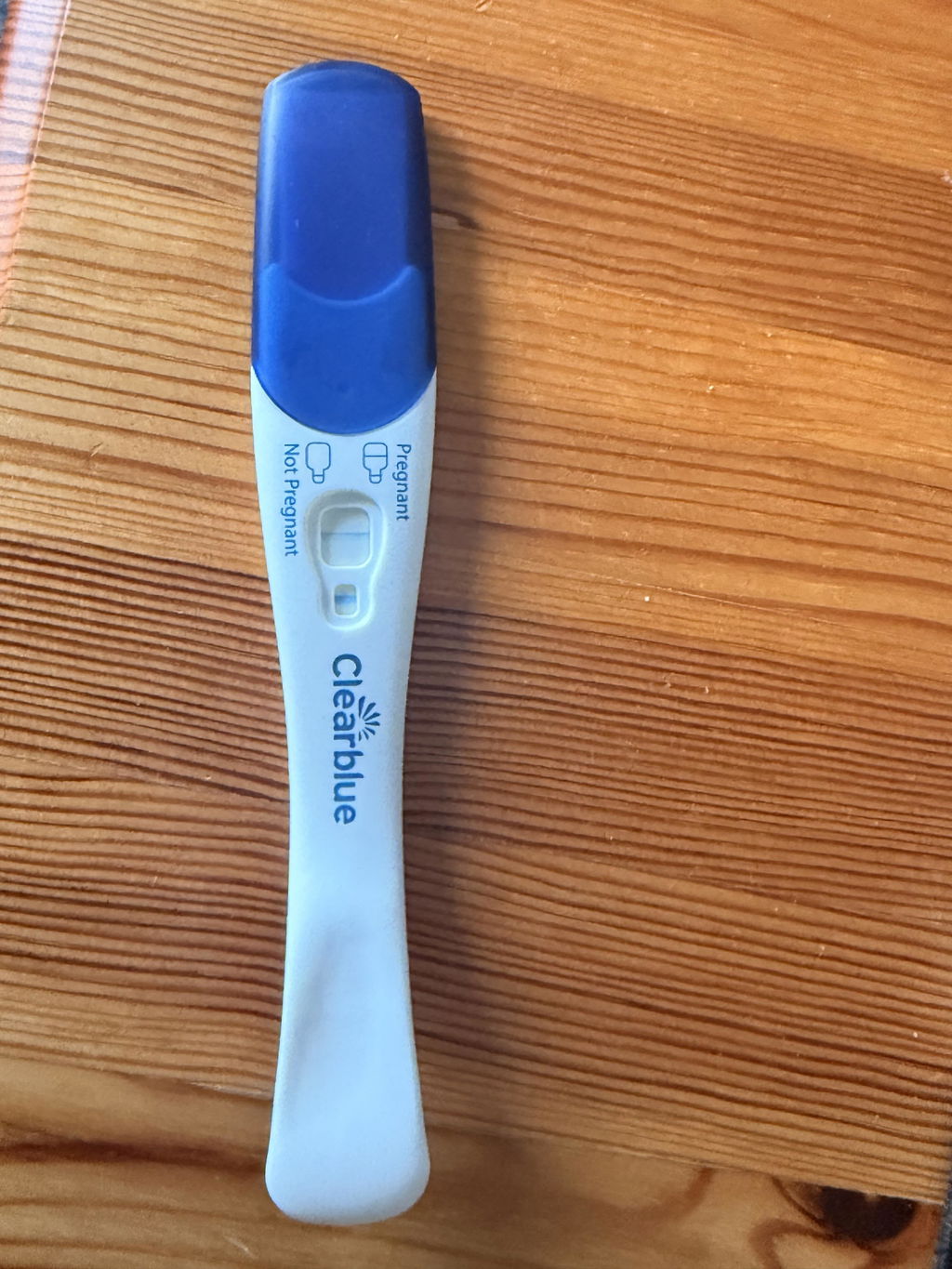
These are published reviews of the kit, copied word for word from the product page, spelling and punctuation exactly as each person wrote them, with the photographs they posted alongside them. They are three individual experiences out of 75 published reviews, and three experiences cannot tell you your odds. We picked three that came with a photograph, and all three of these people were pregnant when they wrote, so this is a selection and not a sample of what happens. The studies further up this page are the evidence on how well the method works; what follows is the part the studies leave out.

Anonymous, 30 April 2026, verified buyer
It worked for us ! I am turning 40 this year and I was worried about my biological clock. We tried this kit one cycle and we are 3 weeks pregnant.

Jessica, 15 July 2026
Wow!! Where do I start.. we started trying Sept 25.. was getting fed up with timed sex.. so we decided to purchase one of these the first month of using it just 2 syringes.. we are pregnant!! So easy to use and, instructions are spot on, the syringes were comfortable too, the sperm pot is brilliantly designed too.
If your in doubt or wanting your baby but want to reduce the pressure, grab yourself one now!! Xx

Emily, 18 January 2026
Still can’t quite believe it!
After a long and emotional journey trying to conceive, using Maia Baby felt like a small moment of hope when we needed it most. The kit was simple, gentle, and helped us feel calm and supported rather than overwhelmed.
When we saw our first positive pregnancy test, we honestly didn’t believe it — so we took a second one just to be sure. Seeing them both positive left us in tears. We’re so incredibly happy and grateful.
This product gave us confidence during one of the most vulnerable times of our lives, and we’ll always be thankful for that.
All 75 reviews are on that page, the lukewarm ones included, and you can read every one of them without asking us.
Is Home Insemination Legal in the UK? (Yes for You, but Not for Everything Around It)
Home insemination is not a criminal offence for the person being inseminated. The offences sit with storing, processing, procuring and distributing sperm without a licence. I have kept the legal statements in HFEA's words or the Act's, because this is not a subject for paraphrasing.
HFEA's FAQs on unregulated sperm donation say:
It's important to know that using an unregulated donor is not a criminal offence, and you are not breaking the law, but the donors or other people involved in the process of making the sperm available may be committing a serious crime.
On what the law restricts:
According to the Human Fertilisation and Embryology (HFE) Act, "using, storing, procuring, testing, processing, and distributing gametes" (eggs or sperm) to be used by humans are all illegal unless they are carried out by a HFEA licensed clinic.
What about sperm delivered to a home address? I am only going to give you HFEA's exact words, from the same page:
People who store their sperm, for example by freezing it, are committing a crime. Arranging for sperm to be delivered to someone, whether organised by an individual or by a business, is also a crime.
HFEA is writing there about unregulated donation. The same page says these activities are illegal "unless they are carried out by a HFEA licensed clinic", and the NHS says donor insemination "can be done at home, with sperm from a licensed fertility clinic, a sperm bank or someone you know". Licensed clinics and sperm banks distribute under their HFEA licence; the same page defines distribution as "the physical transporting of gametes from one place to another".
I am not going to interpret that. If it affects your plans, ask HFEA or a solicitor first.
A friend as a donor is still unregulated. HFEA lists "someone such as a friend" as unregulated donation. There is a middle route, though. HFEA says: "Patients can also bring a known donor - someone they know who has agreed to donate - to the clinic to benefit from all the above tests, checks, support, and consents on legal parenthood."
HFEA's overall position, from its home insemination page: "We strongly advise having treatment at an HFEA licensed clinic, where there are laws and guidance to protect and support all patients and donors."
Who Is the Legal Parent After Home Insemination With a Donor? (The Part to Read Twice)
The birth mother is always the legal mother. With a donor at home, if she is not married or in a civil partnership, the donor is the legal father. If she is, the Act treats her spouse or civil partner as the other parent unless it is shown they did not consent, though HFEA's caution in the table below still applies.
HFEA says: "The birth mother is always the child's legal parent." Section 33(1) of the Human Fertilisation and Embryology Act 2008 reads: "The woman who is carrying or has carried a child as a result of the placing in her of an embryo or of sperm and eggs, and no other woman, is to be treated as the mother of the child." Those words cover the placing of an embryo, or of sperm and eggs; insemination with sperm alone is not within them, so for home insemination with the mother's own egg the position is the ordinary common-law one that HFEA states, rather than section 33.

| Route | Birth mother married or in a civil partnership at the time of insemination | Birth mother NOT married or in a civil partnership |
|---|---|---|
| HFEA licensed clinic, donor sperm | The spouse or civil partner is the other legal parent. HFEA: "your partner will also automatically be the legal parent unless they do not consent to the treatment". Act s.35(1) (husband or male civil partner) and s.42(1) (wife or female civil partner): treated as the father or parent "unless it is shown that" he or she "did not consent". The donor is not a parent: s.41(1). GOV.UK: a clinic donor will not "be the legal parent of any child born". | With a partner: the partner is the legal parent ONLY if both sign the clinic consent forms before treatment. HFEA: "they won't automatically be the legal parent unless you both consent before treatment (before the sperm is inseminated or the embryo is transferred)"; forms WP (birth mother) and PP (partner). Act ss.36 to 37 (agreed fatherhood conditions) and ss.43 to 44 (agreed female parenthood conditions) apply only to "treatment services provided in the United Kingdom by a person to whom a licence applies". Solo woman, HFEA: "the donor has no legal rights or responsibilities to your children". The donor is not a parent in either case. |
| Home insemination (artificial insemination, no clinic) with a known or private donor | Act s.35 and s.42 refer to the time of "her artificial insemination", are not limited to licensed clinics, and both apply "whether W was in the United Kingdom or elsewhere". So the spouse or civil partner is treated as the other legal parent unless it is shown they did not consent, and then "no other person is to be treated as the father" (s.38(1)) or "no man is to be treated as the father" (s.45(1)). GOV.UK birth registration: for female couples, either parent can register alone if "the mother has a child by donor insemination or fertility treatment" and "she was married or in a civil partnership at the time of the treatment". Cautions: HFEA tells sperm donors that outside a clinic "the law on who will be the child's parent(s) is not straightforward", and on its legal parenthood page it says that in a private arrangement "you should seek your own legal advice". My own observation: consent can later be disputed because nobody records it. | The donor is the legal father. HFEA: "If you're a single patient or in a same sex couple and you're not married or in a civil partnership, the donor will be considered the legal parent of any children you might have. This will give him rights over, and responsibilities for, your child." GOV.UK, writing about donating through an unlicensed clinic: "If you use an unlicensed clinic to donate sperm, you will be the legal father of any child born from your donation under UK law." A partner cannot become a legal parent by agreement at home, because the agreed parenthood conditions in ss.36 to 37 and 43 to 44 only exist for licensed treatment. Written donor agreements, HFEA: "these agreements are not legally binding" and "You cannot opt out of being the legal father of the child, even if the mother agrees to that." |
| Conception by intercourse with a donor ("natural insemination") | Not covered by ss.35 or 42, which refer only to embryo transfer, placing of sperm and eggs, or "artificial insemination". HFEA says parenthood "can depend on... whether the insemination took place through artificial insemination or sexual intercourse". Take legal advice. | The same: outside the Act's donor provisions. HFEA on donors who push this: "This is not true and no one should feel pressured into having sex with a stranger." |
Sources, wording checked 19 September 2026: Human Fertilisation and Embryology Act 2008, Part 2; HFEA on legal parenthood, home insemination, donating sperm and unregulated donation; GOV.UK on donor legal rights and birth registration.
A signed donor agreement does not sort this out. HFEA tells donors: "It is important to know that these agreements are not legally binding, and do not guarantee your role in the child's life or your legal and financial responsibilities."
👉 This is general information, not legal advice. Anyone using a known donor should see a family-law solicitor before they start trying, not after.
Where this applies. Section 67(1) reads: "Subject to the following provisions, this Act extends to England and Wales, Scotland and Northern Ireland", so the parenthood rules above are UK-wide. Sections 38(3) and 45(3) disapply sections 35/36 and 42/43 in Scotland where Scots law already treats the child as the child of the parties to a marriage or civil partnership. The birth registration wording comes from GOV.UK, which says there are different rules for registering a birth in Scotland and Northern Ireland, and for parental responsibility in Scotland; neither is covered in this guide.
Using your own partner's sperm. A couple using the male partner's own sperm at home is outside the donor rules entirely. He is the genetic and legal father, as with intercourse. Section 35(1)(b) only applies where the embryo "was not brought about with the sperm of the other party".
Try It: Who Would Be the Legal Parents?
That table is a lot to take in on a phone. Answer up to three questions and this route finder shows the one cell that matches your route, in exactly the same words.


Who Would Be the Legal Parents?
Answer up to three questions and this route finder shows the matching cell from the table above, word for word. It adds nothing of its own, stores nothing and sends nothing anywhere.
Answer the questions above to see the matching cell from the table.
What Health Checks Should a Known Donor Have? (HFEA's Own Words)
A donor outside a licensed clinic has no mandatory health screening, so any checks are down to you and him. I am quoting HFEA's FAQs on unregulated donation in full, because the wording matters.
On screening:
Unregulated sperm donors will not have had the rigorous health checks that are required by licensed clinics before any donation can take place. Although some claim to have had the appropriate health checks, there's often no way of proving this is true.
On infection and genetic risk:
Using an unregulated sperm donor means you are at risk of catching an infectious disease, a sexually transmitted infection, or of the donor passing on a genetic disorder or illness to your child that they may or may not be aware of, such as cystic fibrosis, sickle cell disease, or thalassaemia.
On legal risk:
If you have a child through unregulated donation, and the donor thinks of themselves (now or in the future) to be the 'legal parent' of your child, this could have consequences for you and your family that may have to be resolved through the courts, which can be stressful and expensive.
And from HFEA's home insemination page:
It's always safer to have treatment with donor sperm at a licensed clinic.
It also says:
The HFEA is concerned that apps, websites, or social media sites helping exploitative or serial sperm donors expose people to serious medical, legal, and emotional risks that could have lifelong impacts.
Where to get tested. The NHS says: "If the sperm is not from a licensed fertility clinic, the person donating the sperm can get tested for sexually transmitted infections at a sexual health clinic."
One negative test is not the clinic standard. HFEA says clinic donors have tests "for diseases like HIV and hepatitis, some of which will be required before, during, and after your donation".
If you would rather hear this from a clinician, Carole Gilling-Smith, a fertility consultant and the founder and Medical Director of the Agora Clinic in Brighton, explains in this Q and A for The Fertility Alliance how clinic donors are recruited and screened, and why she would always recommend a licensed clinic. Anything she quotes as a per-cycle figure will be for clinic treatment, not for home insemination.
When Should You See a GP? (Do Not Sit on These)
See a GP after 6 unsuccessful cycles of insemination, straight away if you are 36 or over or know of a possible fertility problem, and urgently if you have symptoms of a pelvic infection. That is from NICE NG257 (March 2026) and the NHS.
- After 6 cycles. For people using artificial insemination, NICE says to "offer further clinical assessment and investigation if they have not conceived after 6 cycles of insemination, in the absence of any suspected or known clinical cause of infertility". With partner sperm, the referral "should include their partner" (see should you get a semen analysis?). NICE says a miscarriage or ectopic pregnancy during the 12 cycles of artificial insemination does not restart that timeframe.
- Age 36 or over. NICE recommends referral at presentation if the person trying to become pregnant "is aged 36 years or over". The NHS says: "Women aged 36 and over, and anyone who's already aware they may have fertility problems, should see their GP sooner."
- If you cannot have intercourse. NICE says: "Offer an initial consultation to discuss the options for attempting conception to people who are unable to, or would find it very difficult to, have vaginal intercourse."
Infection red flags after insemination. The NHS says to ask for an urgent GP appointment or get help from NHS 111 if you think you have symptoms of pelvic inflammatory disease:
- Pain around the pelvis or lower tummy
- Unusual discharge
- Bleeding between periods or after sex
- Pain deep inside during sex
- Heavy or painful periods that are unusual for you
The NHS also says to ask for an urgent GP appointment or get help from NHS 111 if you have pelvic pain that comes and goes, if you have symptoms of PID and you are pregnant or think you might be pregnant, or if you have been diagnosed with PID and do not feel better after 3 days of taking antibiotics. Do not wait to see if these settle. Get them checked.
Call 999 or go straight to A&E, in the NHS's own words, if you think you have symptoms of pelvic inflammatory disease and you have pelvic pain "that's severe, getting worse, or hurts when you move or touch the area", pelvic pain with heavy vaginal bleeding, "a sharp, sudden and intense pain in your lower tummy", pain under your ribs on the right side and in your right shoulder, or you feel dizzy or faint, have a very high temperature or feel hot, cold or shivery, or are feeling or being sick, or are feeling very unwell.
Home Insemination FAQ
Does at home insemination really work?
A randomised trial found home insemination worked as well as the clinic. In a randomised study of home against clinic insemination with cryopreserved donor semen (Hogerzeil and colleagues, 1988) there were 13 pregnancies among the 29 women who started at home in the first six cycles, with no statistical difference from the clinic group. With only 53 women that trial cannot show the two are equivalent, and home was marginally lower on the raw numbers. In a study of 769 couples who could not have intercourse and had no other fertility problem (Izhar and colleagues, 2024), 51.4% to 72.8% conceived over up to 12 months, depending on the cause. Almost none of the home evidence I could find gives a rate per cycle, and none of the studies I found reports rates for home insemination with a known donor in same-sex couples or solo women.
How long does fresh sperm last for home insemination?
I could not find a published standard for home insemination. The closest is the WHO laboratory manual for the examination and processing of human semen (sixth edition, 2021), a laboratory standard, which says examination should "ideally" begin "within 30 minutes after collection, but at least within 60 minutes" and that a sample in transit must not "go below 20 °C or above 37 °C". My practical reading: use a fresh sample once it has liquefied, ideally within the hour, and never refrigerate it. In a 1977 laboratory study, motility at 4 °C was nearly absent at 6 hours. Inside the body is different, as we explain in how long sperm stay in the body.
What are common mistakes with at-home insemination?
The common ones are poor timing, using ordinary lubricant or a standard latex condom at collection, chilling or overheating the sample, and using equipment that is not sterile. With a donor, the big two are relying on his word about STI tests and assuming a written agreement settles legal parenthood. The last is carrying on beyond 6 unsuccessful cycles without an assessment.
How to inject sperm in female to get pregnant at home?
Nothing is injected, and no needle is involved. In the published protocols, semen is collected into a clean, sterile container and drawn up into a 3 ml or 5 ml syringe barrel. The syringe is introduced into the vagina and the plunger gently pushed. The woman then lies down for 15 to 20 minutes. Nothing should ever be passed through the cervix at home.
Is home insemination cheaper than a fertility clinic?
Substantially, yes. Manchester Fertility's patient price list, active from April 2026, lists £2,795 for a single cycle of IUI using donor sperm and £1,795 for a single cycle using partner sperm. A home insemination kit is bought once. Donor sperm from a licensed bank is a separate cost on top of either route, and our guide to insemination cost in the UK sets out the full picture.
What is the difference between IVI, IUI, IVF and ICSI?
IVI is intravaginal insemination, which is the clinical name for home insemination: semen placed high in the vagina with a needleless syringe. IUI is usually done at a fertility clinic, where HFEA says "Sperm are washed and prepared so that the best quality sperm are selected and injected into your uterus", and it is only possible if the fallopian tubes are open and healthy. IVF takes the eggs out and fertilises them in a laboratory, at "£5,000 on average" per cycle on HFEA's figure. ICSI is IVF with one extra step, a single sperm injected into each egg by an embryologist, and HFEA says its success rates "tend to be very similar to IVF". The full comparison, with UK prices and the published rates, is in the section above.
How many people get pregnant using the Maia Baby kit?
More than 100 people have messaged us to say they conceived using the kit, as at September 2026. That is a count of the messages we have received and not a success rate: we do not know the total number of people who have used it, so there is no denominator and we will not invent one. The published studies above are the place to look for rates.
The Part the Studies Leave Out (The Human Side)
None of the papers above measure what this is actually like. They count pregnancies, not the months of trying.
Clare Ettinghausen, HFEA's Director of Strategy and Corporate Affairs, said this in the regulator's June 2026 statement: "We know that there are several reasons why people feel they have no choice but to use an unregulated sperm donor, and we do not blame anyone for doing this."
I would say the same. This guide wasn't about telling anyone which route to take. It was about the real numbers and the real legal position.
If you want someone to talk it through with, HFEA points people to the British Infertility Counselling Association and the Donor Conception Network.
It is emotional, and it can be lonely. Whoever you are doing this with, or if you are doing it on your own, it is still about making a family.
If this guide helped, send it to someone who needs it. We are @maiababyuk on TikTok and Instagram, where the same questions get answered in a minute instead of twenty.
Keep Reading: Helpful TTC Guides
These guides cover the pieces that sit around home insemination:
- Best Time to Get Pregnant
- Sperm Leakage After Insemination
- How Long Do Sperm Stay in the Body?
- Insemination Cost in the UK
- Should You Get a Semen Analysis?